

How to Simplify Daily Household Chores Without Burnout
Last Updated: November 15, 2026
Quick Summary
Simplify daily household chores by first tracking one week of actual task duration, then building a short daily list of five tasks that takes fifteen to twenty minutes. Attach each task to an existing habit and keep a four-task minimum-clean standard for difficult days.
- Time each chore's whole loop, not just the fun part, over one ordinary week.
- Keep the daily list to five tasks and fifteen to twenty minutes.
- Split chores by whole categories, not half-tasks, in couples.
- The minimum-clean standard is four tasks done in ten minutes.
- Buy a gadget only if its net time saved pays back within a few months.
Table of Contents
- Start With a Time Inventory Before You Change Anything
- Build a Daily House Cleaning List That Fits Your Real Schedule
- The Household Chores List for Adults Who Work Full-Time
- Daily Cleaning Habits That Cut Clutter Without Willpower
- Gadgets to Make Housework Easier (and When They Are Worth It)
- Split Chores by Household Size, Energy and Ability
- Set a Minimum-Clean Standard for Difficult Days
- Measure Whether Your New Routine Actually Saves Time
- Frequently Asked Questions
Start With a Time Inventory Before You Change Anything
Most people trying to simplify daily household chores start by buying a planner. That is the wrong first move. You cannot fix a schedule you have never measured.
A time inventory is a simple record of how long each household chore really takes. Not how long you think it takes. How long it actually takes, timed over one ordinary week.
Track One Week of Actual Task Duration
Grab a notebook or a notes app. For seven days, write down each chore and the clock time when you start and stop. Keep it rough.
- Laundry load: start to folded and put away
- Dishes: including the pots nobody counts
- Floors: sweeping or vacuuming one room
- Bathroom wipe-down: sink, mirror, toilet
- Trash and recycling: bagging and carrying out
A common mistake is timing only the fun part. Dishes are not ten minutes. Dishes are ten minutes plus drying plus putting away plus wiping the counter.
At the end of the week, add up the totals.
Build a Daily House Cleaning List That Fits Your Real Schedule
A daily house cleaning list works when it is short enough to finish on a bad day. Five tasks, fifteen to twenty minutes, done.
Start with a core list that holds up for most households:
- Make the bed
- Wipe kitchen counters after the last meal
- Run one load of laundry or one load of dishes
- Sweep or spot-clean the busiest floor
- Reset one surface: entryway table, coffee table, or desk
Notice what is missing. No deep cleaning. No baseboards. Those belong on a weekly or monthly list, not a daily one.
For a deeper system that keeps the list from collapsing under clutter, our guide on how to organize home for efficiency without the overwhelm walks through the setup step by step.
The trick nobody tells you: attach each task to something you already do. Wipe the counter while the kettle boils.
Adapt the List to Your Household Size
A single person and a family of five cannot run the same daily list. Scale the core list to the number of people creating the mess.
- Living alone: keep all five core tasks but shorten each. One load of laundry every other day, not daily. Wipe counters once after dinner. The list stays the same shape but takes ten minutes, not twenty.
- Couples: split the core list by category, not by task. One person owns kitchen surfaces end to end. The other owns floors and laundry. Whole categories prevent the "I did the dishes but not the pots" argument.
- Families with young children: add one child-reset task to the daily list: toys back in one bin before bedtime. Keep the adult list at five tasks and let the child task run in parallel. Young children can sort laundry by color or set the table; those count as their daily contribution, not yours.
- Roommates: assign core tasks by day of the week so no one has to ask. Monday is kitchen, Tuesday is trash, and so on. Write it on a shared note where everyone can see it.
Adapt the List to Your Work Schedule
A weekday list for someone who works from home looks different from one for someone who commutes an hour each way.
- Office workers with a commute: move the core list to the evening and cut it to three tasks on workdays. Make the bed, wipe counters, run one load. Save floors and surface resets for the weekend block.
- Remote workers: use the natural breaks in the day. Start laundry before your first meeting. Wipe the kitchen counter at lunch. The chores interleave with work instead of competing with it.
- Shift workers: anchor the list to your wake-up and wind-down, not the clock. The list follows your body, not the calendar.
Adapt the List to Your Energy Level
Energy is not constant, and a list that assumes a full tank every day will break.
- Full energy day: all five core tasks plus one weekly task pulled forward.
- Reduced energy day: three core tasks, chosen in advance so you are not deciding while tired.
- Minimum day: the four-task minimum-clean standard covered later in this guide. Dishes out of the sink, trash out, one surface cleared, bed made.
Decide which version you are running at the start of the day, not in the middle of it. The decision itself is the exhausting part.
Watch out: a daily list that never gets shorter is not a daily list. It is a weekly list wearing a daily label.
The Household Chores List for Adults Who Work Full-Time
A household chores list for adults with full-time work has to assume low energy on weekdays. Plan the heavy tasks for two evenings and one weekend block. Everything else stays light.
Try this split:
| Day | Task | Time |
|---|---|---|
| Monday | Laundry load + fold | 20 min |
| Tuesday | Bathroom wipe-down | 10 min |
| Wednesday | Floors | 15 min |
| Thursday | Kitchen deep wipe | 15 min |
| Friday | Rest | 0 min |
| Saturday | Bedding, trash, errands | 45 min |
| Sunday | Meal prep + reset | 40 min |
Time
Friday is empty on purpose. A schedule with no slack is a schedule that breaks the first time life happens.
Weekly and Monthly Chores Worth Scheduling
Weekly chores cover the things a daily list skips: bedding, bathroom scrub, mopping, dusting main surfaces. Monthly chores are the ones people forget until they become a crisis:
- Oven and microwave interior
- Fridge shelves and expired food
- Baseboards and door frames
- Windows and mirrors
- Under the bed and behind furniture
Put monthly tasks on a calendar reminder. Memory is not a system.
Daily Cleaning Habits That Cut Clutter Without Willpower
Daily cleaning habits beat motivation every time. The goal is to remove decisions, not add discipline.
Start with the counter. Counters collect mail, keys, chargers, and yesterday's mug because none of those things have a place.
Small organizers do most of this work. Our article on reducing kitchen counter clutter with small organizers has specific setups that take minutes to install.
Another habit that pays off: the two-minute rule. If a task takes under two minutes, do it now.
And one more: never leave a room empty-handed. Carry one thing back where it belongs each time you walk through.
Gadgets to Make Housework Easier (and When They Are Worth It)
Gadgets to make housework easier only pay off when they remove a repeated task. A tool that saves thirty seconds once a week is a decoration; a tool that saves five minutes every day is worth real money.
The Payback Test Before You Buy
The honest test is simple. Count how often you do the task. Multiply by the time saved per use.
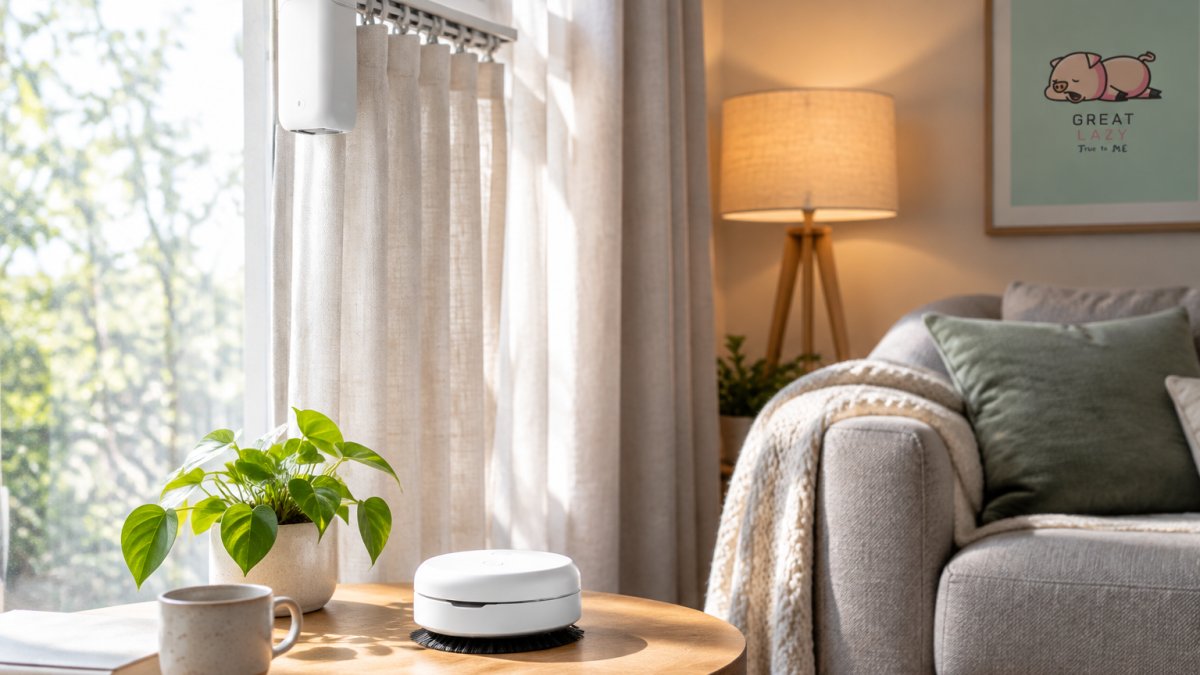
A worked example: a smart curtain motor removes a twice-daily task of opening and closing curtains.
A counter-example: a single-purpose vegetable spiralizer that saves two minutes once a month. Setup and cleaning add three minutes per use. The net is negative.
Our take on affordable smart gadgets: most are worth it only when they replace a daily action, not a weekly one. If you are weighing the cost, this breakdown of whether affordable smart home gadgets are worth it covers the math.
The Setup Cost Nobody Mentions
Every gadget has a hidden second price: the time to install it, learn it, and maintain it. A tool that saves five minutes a day but takes two hours to set up and ten minutes a month to maintain is still worth it, but only if you count the setup honestly.
- Installation time: a curtain motor needs the right track type and a pairing session with your phone. Budget an afternoon, not five minutes.
- Learning curve: app-based tools add a new interface to your life. If the app is confusing, the tool will sit unused.
- Maintenance: batteries, filters, firmware updates, and cleaning the tool itself. A mini vacuum that never gets its filter emptied stops working.
- Reversibility: can you return it or resell it if it does not fit your routine? Tools that lock you in are riskier than tools that do not.
A common pattern is that people buy the tool, use it for two weeks, and then forget it exists. The payback test above is designed to catch that before you spend the money.
Three Tools That Genuinely Save Time
1. A smart curtain motor. The Smart Curtain Motor with Light and Temperature Sensing can open and close curtains on a timer or in response to light and temperature settings.

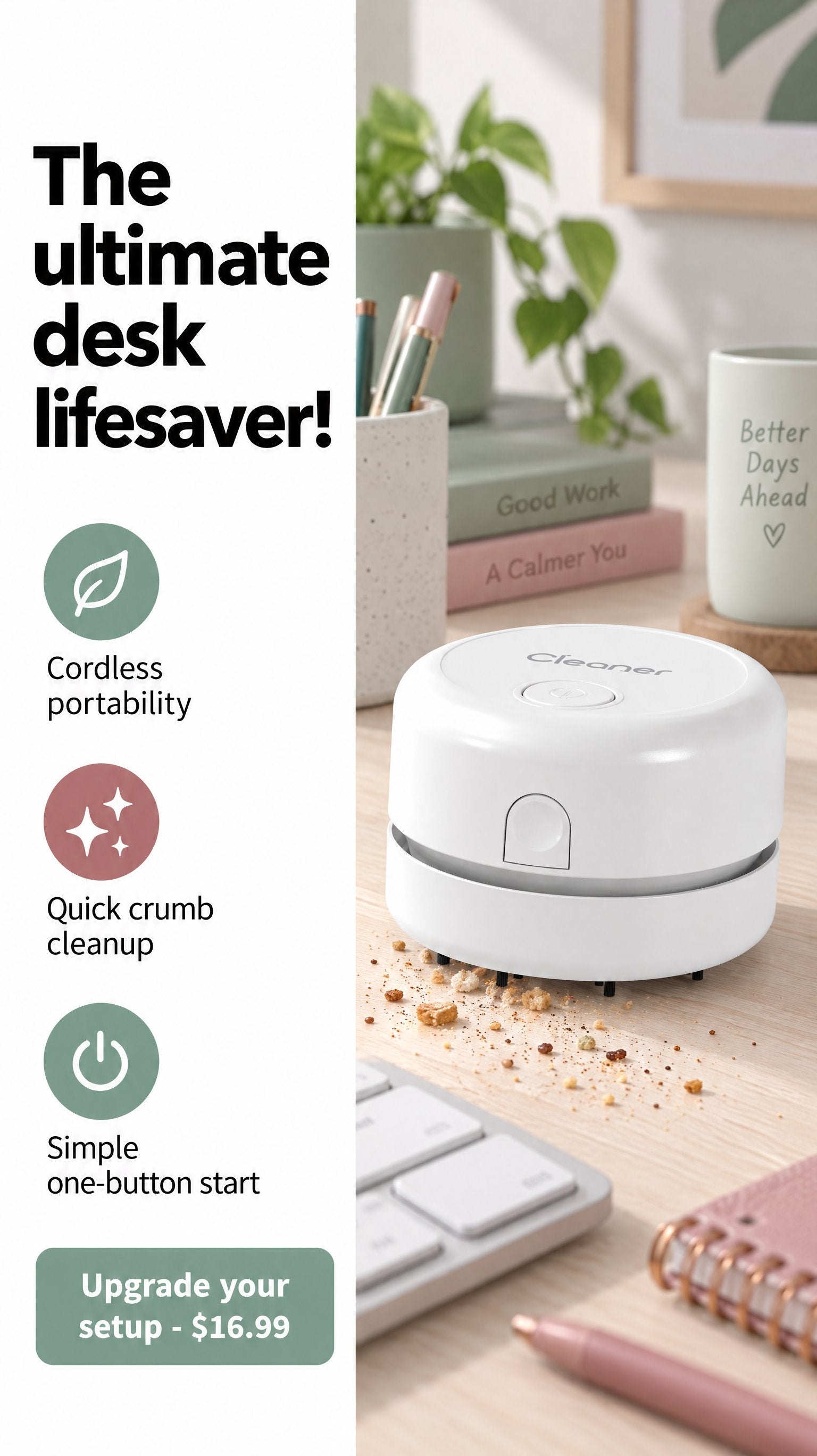
2. A mini desk vacuum. The Cordless Mini Desk Vacuum Cleaner handles crumbs and keyboard dust in seconds.
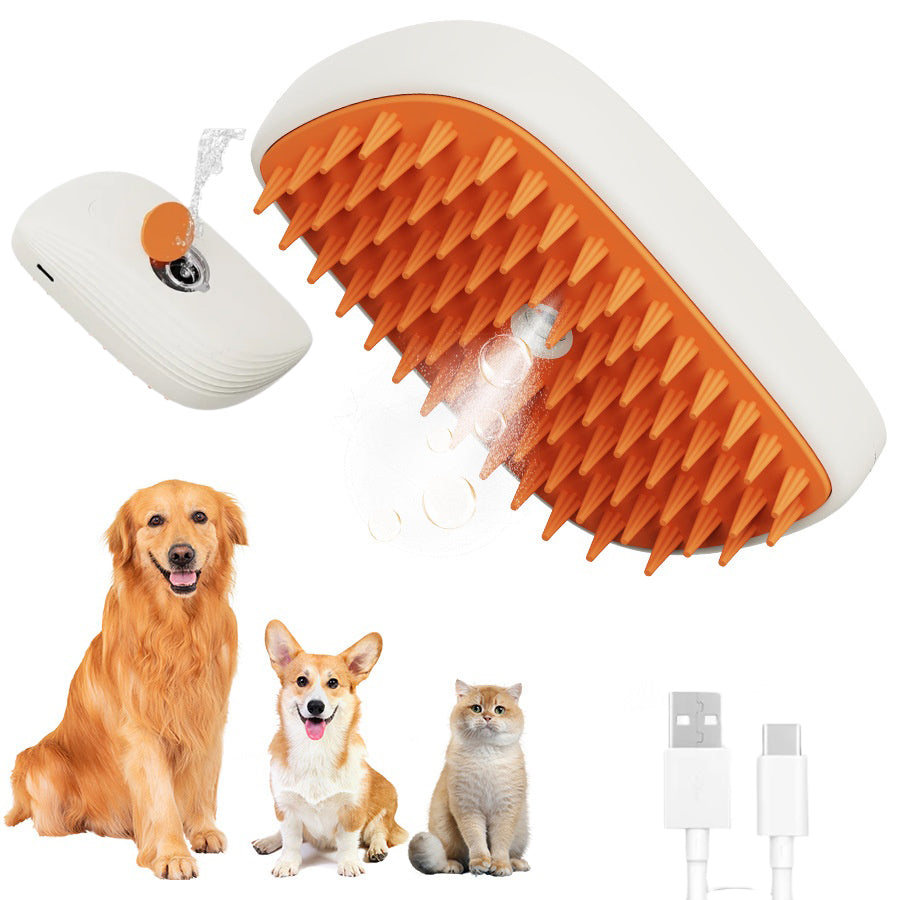
3. A pet grooming brush. If pets are part of your mess, the Cat Steam Brush with Spray combines brushing and spray in one USB-rechargeable tool.
Buy a gadget only after the time inventory shows the task is real and repeated. Otherwise it becomes one more thing to clean around.
Split Chores by Household Size, Energy and Ability
Chore splitting fails when it is based on fairness instead of reality. Match tasks to time, energy, and physical ability, and the argument mostly disappears.
A few principles that work:
- Living alone: automate what you can, and accept a smaller standard. One person cannot run a four-person household.
- Couples: assign whole categories, not half-tasks. One person owns laundry end to end. The other owns kitchen end to end.
- Families with kids: give children age-appropriate jobs. Young children can sort laundry by color or set the table. Older kids can run a load, take out trash, or vacuum one room. Responsibility builds slowly, and it takes the load off you.
- Low energy or chronic illness: plan around your best hours, not the clock. Do the heaviest task when your energy peaks, and use seated or low-bend tools where they help. A minimum standard is not failure.
For shared homes, write the list down where everyone can see it. Verbal agreements fade.
Set a Minimum-Clean Standard for Difficult Days
A minimum-clean standard is the shortest list of tasks that keeps a home livable when you have nothing left.
Here is one that works:
- Dishes out of the sink
- Trash taken out
- One surface cleared
- Bed made
That is it. Four tasks, ten minutes. On a hard day, this is the whole job.
On overwhelming days, the goal is not a clean house. Our guide on slow living tips for stressed parents covers how to hold that line without guilt.
Measure Whether Your New Routine Actually Saves Time
A routine only counts as simpler if it gives time back. Measure it.
Run the same time inventory you did at the start. One week, same tasks, same timing. Compare the totals.
What to look for:
- Total weekly chore time, before and after
- Number of tasks that moved off your daily list
- Days you skipped the routine entirely
- How tired you felt at the end of the week
If the total dropped, keep going. If it climbed, cut a task.
Most people find the win is not fewer minutes. It is fewer decisions.
The hardest part of simplifying daily household chores is not the cleaning.
Frequently Asked Questions
What is the 5-5-5 rule for cleaning?
The 5-5-5 rule splits cleaning into three short bursts: five minutes tidying one room, five minutes wiping surfaces, and five minutes putting items back in their designated place. It works because it removes the pressure of a full deep clean and keeps household chores from piling up. Set a timer for each block and stop when it rings. Most people finish a visible reset of a living room or kitchen in that time, which makes it easier to repeat daily.
How can I finish daily household chores in less time?
Track how long each task actually takes for one week, then group short chores into a single block. A daily house cleaning list of ten to fifteen minutes usually covers making the bed, wiping counters, a quick sweep and one load of laundry. Keep tools within reach in each room so you are not walking to fetch them. Batching similar tasks, like folding clothes while something cooks, cuts the total time without adding extra effort to your day.
Which gadgets to make housework easier are actually worth buying?
Focus on tools that remove a repeated physical action rather than ones that just look nice. A smart curtain motor can open and close curtains on a schedule. A cordless mini desk vacuum is designed for crumbs and loose dust on desks and keyboards. Small, single-purpose items tend to earn their place because you use them often and they take seconds to operate. Skip anything that needs a long setup before each use.
How do I build daily cleaning habits when I have low energy or a chronic illness?
Set a minimum-clean standard you can meet on your worst days, such as dishes in the sink cleared and one surface wiped. Pair each habit with something you already do, like wiping the bathroom counter after brushing your teeth. Sit down for tasks where possible and keep supplies on each floor so you are not climbing stairs. Consistency at a low level beats occasional big cleans, and a short daily cleaning habits list protects your energy for the rest of the day.
