

Is Slow Living a Realistic Goal? A Practical Guide
Last Updated: November 19, 2026
Quick Summary
Yes, slow living is a realistic goal, but only in a scaled-down form. The version sold online, with empty calendars and countryside mornings, is not realistic for most working people, while the version built around small, protected pockets of time is realistic for many. Feasibility depends on your schedule control, how many people depend on you, and what you will say no to.
- Stage the change over roughly three months, adding one protected pocket and one boundary per stage.
- Move to the next stage only when the previous one has held for two weeks without collapsing.
- Protect transition minutes rather than whole hours when your schedule is not yours to set.
- Track signals like phone pickups before noon and screen-free meals weekly to see if life is slowing.
- Buying cozy items cannot substitute for changing your schedule, though a diffuser can support a slower evening.
Table of Contents
- What Slow Living Really Means (and What It Doesn't)
- Slow Living vs Hustle Culture: What Actually Changes
- Is Slow Living a Realistic Goal in a Fast-Paced World?
- Slow Living Examples for Beginners: What It Looks Like Day to Day
- How to Practice Slow Living on a Budget
- Slow Living Tips for Stressed Parents (and Other Demanding Jobs)
- How to Tell If Your Life Is Actually Getting Slower
- Start Small: Cozy Tools That Make Slowing Down Easier
- Frequently Asked Questions
What Slow Living Really Means (and What It Doesn't)
Slow living is a deliberate approach to daily life that prioritizes intention, rest, and sustainable pace over speed and constant output. It is not about doing everything slowly, and it is not about opting out of work or ambition.
The confusion starts with the word "slow." Most people picture long mornings, linen clothes, and no calendar. That version exists mostly in advertising.
What it doesn't mean:
- Quitting your job or rejecting ambition
- Spending money on a curated aesthetic
- Doing less for the sake of doing less
- A personality type you either have or don't
The core question, is slow living a realistic goal, depends less on your circumstances than on how you define it. Someone working two jobs can practice it. Someone with a flexible schedule can completely miss it.
Slow Living vs Hustle Culture: What Actually Changes
Hustle culture measures a day by output. Slow living measures a day by attention. That single swap changes almost everything downstream.
Under hustle culture, rest is something you earn after the work is done, which means it never arrives. Under slow living, rest is part of the schedule, not a reward for finishing it.
What actually changes in practice:
- Mornings: from phone-first to one deliberate action before screens
- Work: from constant availability to defined stopping points
- Evenings: from scrolling to something chosen
- Goals: from more to fewer, with more depth
The trade-off is real. Hustle culture delivers visible output fast. Slow living delivers steadier output over a longer period, which is harder to show off and easier to sustain.
Is Slow Living a Realistic Goal in a Fast-Paced World?
Yes, slow living is a realistic goal, but only in a scaled-down form. The version sold online, with empty calendars and countryside mornings, is not realistic for most working people.
Feasibility comes down to three variables: how much control you have over your schedule, how many people depend on you, and how much you are willing to say no to. Change any one of those and the plan changes. Most advice fails because it quietly assumes all three are in your favor.
A Gradual Transition Plan That Survives Real Life
Rather than redesigning your week, stage the change over roughly three months. Each stage adds one protected pocket and one boundary, and you only move on when the previous stage has held for two weeks without collapsing.
- Weeks 1-2: One anchor. Pick a single 20-minute slot you control, the first coffee before anyone wakes, the walk after a shift, the ten minutes before bed. Protect it every day. No new purchases, no schedule overhaul.
- Weeks 3-4: One boundary. Add a stopping point: a fixed end to work, a phone-free meal, or a 'no' to one recurring evening commitment. Expect friction the first week; that is the boundary doing its job.
- Weeks 5-8: One recovery block. Add a longer weekly block, a half-day, a slow morning, a walk without headphones, and treat it as fixed, not as a reward you earn by finishing everything else.
- Weeks 9-12: One structural change. Only now consider something bigger: renegotiating a deadline pattern, dropping a commitment for a season, or shifting a recurring task. This is the stage most people attempt first and abandon.
A common pattern is that stages one and two hold easily, stage three slips during a busy month, and stage four requires a conversation with someone else. Plan for the slip. When a stage collapses, return to the previous one for a week rather than abandoning the whole effort.
The Honest Trade-Offs and Who May Not Benefit
This is where most slow living advice falls apart, so let's be direct about the costs.
You will disappoint people. Declining evening events, leaving work at a fixed time, and not replying instantly all carry social friction. If your job is genuinely inflexible, such as shift work with fixed handovers or on-call rotations, you cannot restructure your day.
Some people should be cautious with this advice, and the caution is structural, not personal:
- Anyone in acute financial stress, where reducing hours is not an option and time poverty is imposed rather than chosen
- Parents of very young children, where the schedule is not yours to set and sleep is the scarce resource
- People whose work culture penalizes visible boundaries, where a fixed stop time carries real career risk
- Caregivers for ill or elderly relatives, where the demands are unpredictable week to week
For those readers, treat slow living as a set of small recoveries rather than a lifestyle overhaul. That version still works, and it is more honest than pretending a demanding job or a caregiving load is a mindset problem.
Slow Living Examples for Beginners: What It Looks Like Day to Day
A beginner's slow living looks small and unglamorous: one screen-free meal, a short walk without headphones, a single evening task instead of five. The point is repetition, not spectacle.

Here is what a realistic weekday looks like:
- Wake without immediately opening your phone
- One task at a time for the first hour of work
- Lunch away from the desk
- A defined end to the workday
- One deliberate evening activity: reading, cooking, a walk
Beginners often make the mistake of redesigning everything at once. If you want a tangible, low-effort example of a small change that shifts the mood of a room, ambient lighting and how it affects daily stress is a good place to start.
How to Practice Slow Living on a Budget
Slow living on a budget costs almost nothing, because the expensive version is mostly marketing. The habits that matter, walking, reading, cooking, resting, are free or close to it. But 'budget' means different things depending on whether you have some discretionary money and little time, or little of both. The steps below are grouped by situation so you can take the ones that fit rather than the ones that assume a flexible schedule and a quiet home.
If You Have Limited Money but Some Control Over Your Time
- Library before bookstore. Borrow first, buy only what you will reread. Many libraries also lend tools, seeds, and museum passes.
- One good object instead of five cheap ones. A single well-made item you use daily beats a haul you forget. Buy secondhand where quality holds.
- Free movement. Walking, stretching at home, and bodyweight routines need no membership. A park or a stairwell works.
- Cook one pot, eat twice. Fewer decisions, less waste, more time back.
- Audit subscriptions monthly. Most people pay for at least one thing they no longer use; canceling one is a slow-living act with a measurable return.
If You Have Little Money and Little Control Over Your Time
This is the situation most slow-living content ignores, and it is the one where generic advice does the most damage. When you are working multiple jobs or unpredictable shifts, the goal is not a calmer schedule, it is recovery inside a schedule you cannot change.
- Protect transition minutes, not whole hours. The ten minutes between jobs, the walk from the bus stop, the first five minutes home. Treat them as buffer rather than dead time.
- Use free recovery that does not require setup. A parked car, a library chair, a bench outside work. Rest does not need a room of your own.
- Batch decisions to reduce load. Same breakfast, same work bag, same weekly grocery list. Decision fatigue is a real cost, and removing small choices is free.
- Say no to one thing per season, not per week. One recurring commitment dropped is more sustainable than a dozen small refusals.
- Ask what your employer already provides. Some workplaces offer break rooms, quiet rooms, or shift-swap policies, so it is worth asking.
If You Share a Home and Cannot Change It
Living with family, roommates, or in a small flat limits the 'calm room' advice that dominates slow-living content. Work with what you have:
- Claim one corner, not one room. A chair, a windowsill, a spot by the window with a lamp. Consistency matters more than size.
- Negotiate one quiet window. A agreed hour when headphones go on or the TV goes off. Frame it as a household benefit, not a personal demand.
- Use public quiet. Libraries, parks, and places of worship offer free calm that a shared home may not.
- Lower the aesthetic bar. Slow living does not require matching linen; it requires a repeatable pause.
If chores are what is eating your evenings, simplifying household routines without burning out covers the practical side in more depth. Watch out: the biggest budget mistake is buying cozy items as a substitute for changing your schedule, a diffuser supports a slower evening, it cannot create one.
Slow Living Tips for Stressed Parents (and Other Demanding Jobs)
For stressed parents, slow living tips work only when they fit inside the gaps you already have, not when they add another appointment. The goal is recovery in small doses, repeated often.
What actually helps:
- Lower the bar on weeknights. A simple dinner is not a failure.
- Build one anchor ritual. Bath, book, lights down, same order every night.
- Trade screen time for parallel quiet. Everyone in the same room, doing their own calm thing.
- Say no to one recurring commitment per season. Just one.
- Protect the first twenty minutes after work. No chores, no questions, no phone.
Parents carrying a heavy load often find that a calmer evening environment does more for the household mood than any scheduling system. Our slow living guide for stressed parents goes deeper into routines that survive real family life.
How to Tell If Your Life Is Actually Getting Slower
You can measure this without a journal or an app. Track four things weekly and compare month to month:
| Signal | Faster | Slower |
|---|---|---|
| Phone pickups before noon | 10+ | Under 5 |
| Meals eaten away from a screen | 0-2 per week | 4+ per week |
| Days ending with a defined stop time | Rarely | Most days |
| One uninterrupted 20-minute block | None | At least 4 per week |
None of these are moral scores. They are simply easier to notice than a vague feeling that life is too fast. Pick two, track them for a month, and change one thing if the numbers have not moved. A plateau is normal; it usually means you have protected the easy slots and the next gain requires a harder conversation.
Start Small: Cozy Tools That Make Slowing Down Easier
A fair objection: if slow living is about doing less, why buy anything? It is a good question, and the honest answer is that a tool only earns its place if it removes a small friction or makes a restful habit easier to repeat.
Three items that pass it:
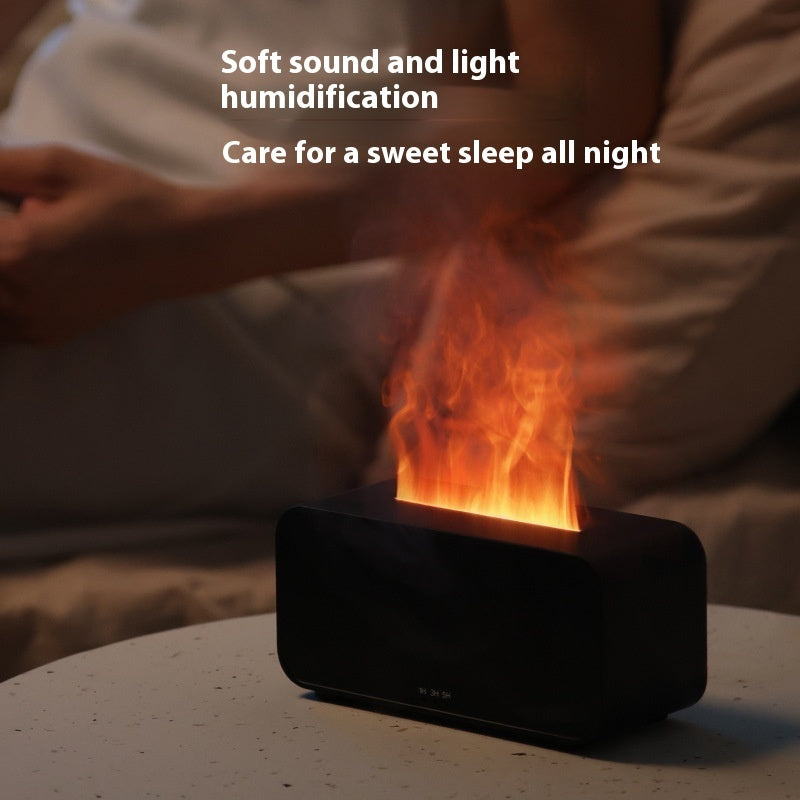
- Cozy Flame Aromatherapy Diffuser & Air Humidifier ($26.99) gives an evening a clear start signal, with 1, 3, or 5-hour timers and automatic shut-off.
- 3D Moving Sand Art ($22.99) needs no power and offers a two-minute visual pause at your desk.
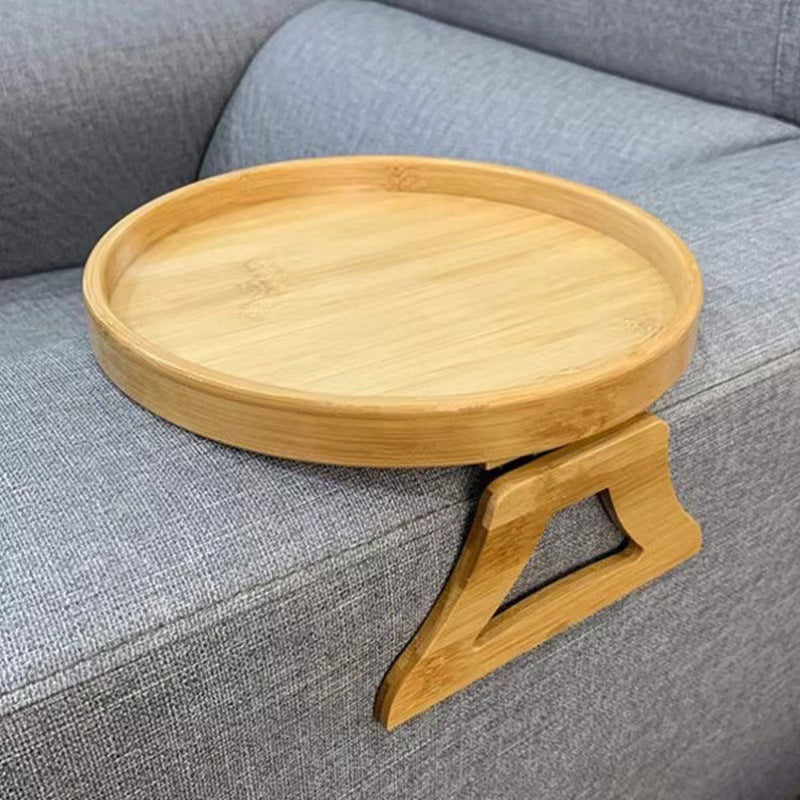
- Natural Bamboo and Wood-colored Lazy Sofa Armrest Tray ($28.99) keeps a drink, phone, and remote in one spot, so settling in takes one motion instead of three.
Every order ships free, and our customers rate us 4.6/5 across 206 reviews. Watch out for one thing: buying cozy items as a substitute for changing your schedule. A diffuser can support a slower evening, but it cannot create one on its own.

The hardest part of slow living is not the habits, it is holding the boundary when everything else wants your attention.
Frequently Asked Questions
Is slow living just for the wealthy?
No. Slow living is about pace and intentional choices, not spending power. Most of the practices that matter, like walking instead of scrolling, cooking a simple meal, or protecting an evening without screens, cost nothing. The expensive version you see online is a marketing layer, not the lifestyle itself. If you can set one boundary around your time this week, you have already started, whatever your budget looks like.
Is it okay to live a slow life in a high-pressure career?
Yes, but you have to be realistic about scale. You may not be able to change your working hours, but you can control the edges: a slower morning routine, a proper lunch away from your desk, a hard stop on email after a set time. Slow living in a demanding job looks like small protected pockets rather than a total lifestyle overhaul, and those pockets still count.
How do you start slow living when you have no time?
Start with one thing you already do and do it more deliberately. Drink your coffee without your phone. Take a ten-minute walk after dinner. Choose one evening a week with no plans. These slow living examples for beginners take almost no extra time because they replace existing moments rather than adding new ones. Build from there once the first habit feels normal.
Is slow living actually good for mental health, or is that hype?
The general direction is sound: reducing overstimulation, protecting rest, and setting boundaries are widely linked to lower stress and better focus. Treat specific claims about productivity or mood gains with some caution, since much of the evidence is self-reported rather than measured. The practical takeaway is that fewer inputs and more deliberate rest tend to help most people, even if the exact numbers are fuzzy.
