

Why Ambient Lighting Helps Your Daily Stress Levels
Last Updated: November 2, 2026
Quick Summary
Soft, warm ambient lighting can help lower everyday tension by calming the senses and easing eye strain, though the effect is real but modest. It works best alongside sleep, rest, and a steady routine, so treat lighting as one part of a relaxing routine rather than a standalone fix.
- Swap harsh ceiling lights for one warm lamp and keep screens dim after dinner.
- Warm light around 2700K to 3000K is best for relaxation in the evening.
- Cool or neutral light suits focus during work hours; switch to warm light after work.
- Put light to the side of your screen and use a desk lamp for tasks.
- A warm bulb, dimmable bulbs, or a small night light can calm a room for very little cost.
Table of Contents
- How Ambient Lighting Affects Daily Stress
- Warm Lighting for Relaxation: Why Color Temperature Matters
- Home Office Lighting for Stress Relief During the Workday
- Relaxing Lighting Ideas for Home That Cost Little
- Lighting and Mood: What the Evidence Says and Where It Stops
- Frequently Asked Questions
How Ambient Lighting Affects Daily Stress
Soft indirect ambient lighting can create a calmer atmosphere in the evening, while bright overhead bulbs keep you alert. Swap harsh ceiling lights for one warm lamp and keep screens dim after dinner.
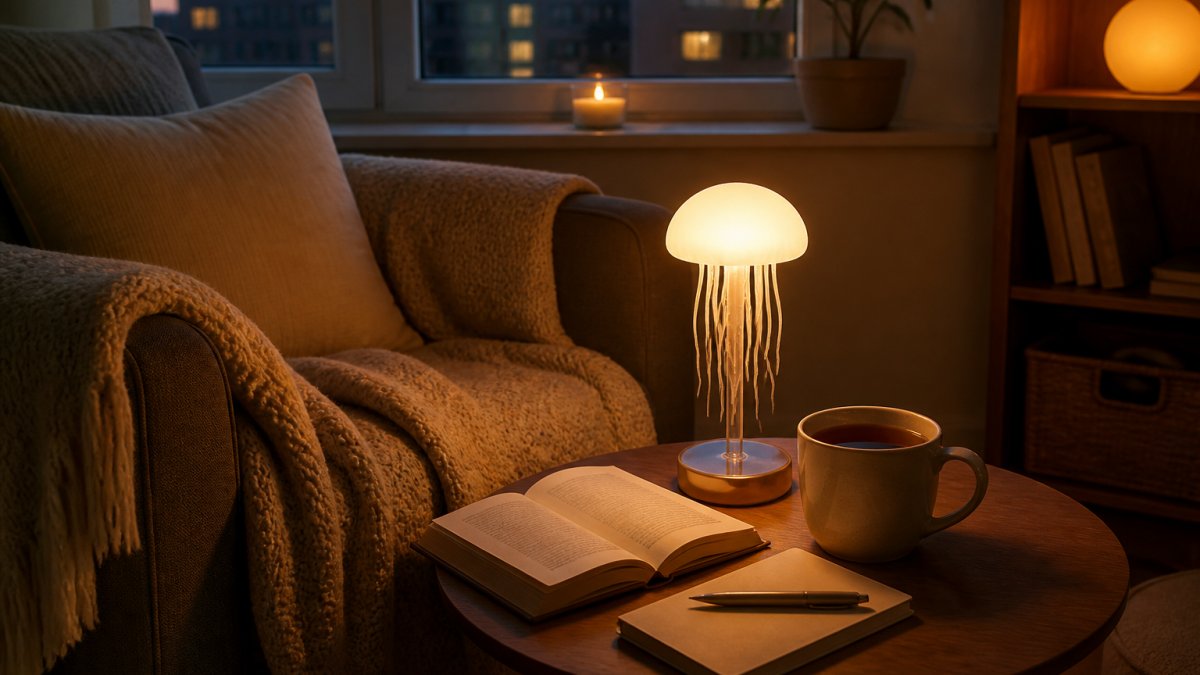
Harvard Health overview of light and circadian rhythm explains how light timing shapes sleep and mood. For a ready-made calm glow, our ambient floating LED jellyfish mood lamp brings slow, hypnotic movement to any corner.

Warm Lighting for Relaxation: Why Color Temperature Matters
Color temperature, measured in kelvin, is how warm or cool a light reads. Warm light feels golden and soft and suits winding down; cool white suits focus and morning tasks.
| Time of day | Light color | Best for |
|---|---|---|
| Morning | Cool white | Focus and alertness |
| Evening | Warm white | Winding down |
| Night | Amber or dim | Sleep prep |
Lighting a whole room with one bright overhead fixture can feel harsh, while layered warm light tends to feel more relaxing. Two easy picks: our flame aromatherapy diffuser pairs a flame-like LED glow with aromatherapy scent, and the capybara touch night light gives a soft, dimmable glow for bedtime.


Home Office Lighting for Stress Relief During the Workday
Home office lighting for stress relief comes down to control: bright, even light for focus and a quick way to soften it when the day ends. Put light to the side of your screen, use a desk lamp for tasks, and switch to warm light once work is done. For more, read our guide on stress relief tools for home workers.
Ambient Floating LED Jellyfish Mood Lamp - USB Colorful Voice Control →
Relaxing Lighting Ideas for Home That Cost Little
You do not need a big budget to make a room feel calmer, the goal is soft, layered light with a warm tone.
Try string lights along a shelf, a warm bulb in an existing lamp, or dimmable bulbs you can lower at night. Our star sky projector with film projects star and galaxy images onto a ceiling, with no rewiring needed.
Lighting and Mood: What the Evidence Says and Where It Stops
Lighting can be one part of a relaxing routine, but it works best alongside rest, movement, and real downtime. Choose dimmable, warm options and avoid harsh glare near your face.
Frequently Asked Questions
Can ambient lighting help reduce stress?
It can help, within limits. Soft, warm ambient lighting signals to your body that the day is winding down, which supports the wind-down routine that lowers stress. It won't erase a stressful job or fix poor sleep on its own. Think of it as one small lever: dim, warm light in the evening makes it easier to relax, while harsh overhead light keeps your space feeling alert and busy.
What type of lighting is most relaxing?
Warm, low-level light from a single source beats bright overhead fixtures for winding down. Lamps with a soft glow, like a jellyfish mood lamp or a silicone touch night light, give you that without rewiring anything. Keep the light below eye level where you can, and avoid cool white bulbs in the rooms where you rest.
Is dim lighting better for relaxation than bright light?
For evenings, yes. Dim light helps your body shift toward rest, while bright light late at night works against that shift. The catch is daytime: a dim home office can make you sluggish and strain your eyes. Use brighter, cooler light for focused work, then switch to warm dim light once you log off.
Your home should feel like a place to breathe, not another source of pressure. At GreatLazy, we curate cozy, easy-to-use pieces that make winding down simpler, from soft ambient lamps to warm-glow diffusers. Every order ships free, and our selection is built around comfort and calm, rated 4.6/5 by our customers. Get started with GreatLazy and turn one small corner of your home into a calmer place to land.
